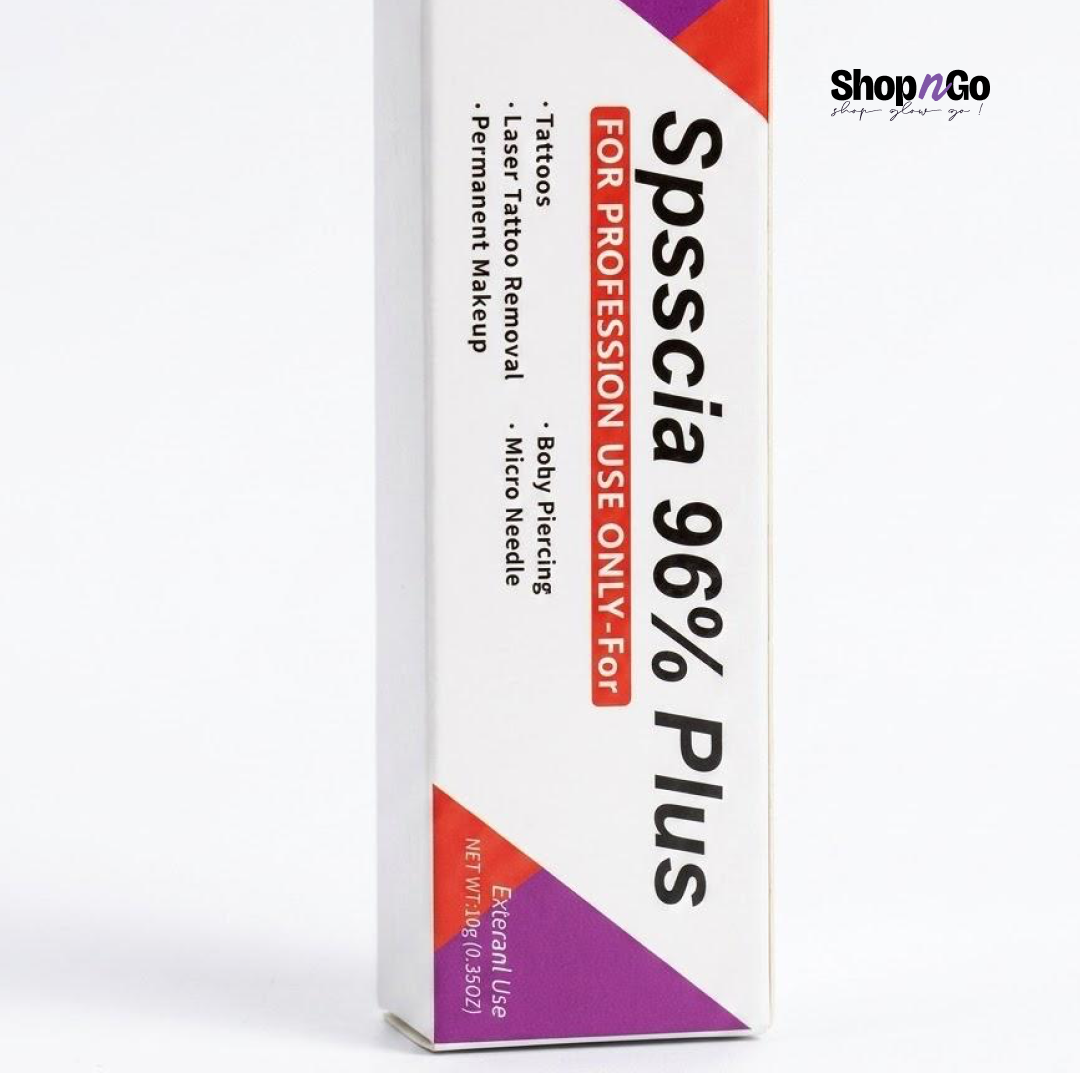
Spsscia Numbing Cream 96% – For Tattoos, Microneedling & PMU
Spsscia Numbing Cream 96% – For Tattoos, Microneedling & PMU
Couldn't load pickup availability
Spsscia 96% Numbing Cream is a topical numbing cream designed to temporarily reduce skin sensitivity during selected cosmetic and aesthetic procedures. It is commonly marketed for tattooing, microneedling, permanent makeup (PMU), microblading, laser tattoo removal, and body piercing. Available listings identify the product as a 10g tube.
It is a convenient choice for professional tattoo artists, PMU technicians, and aesthetic practitioners who want to help improve client comfort during suitable procedures.
Key Features
- 96% Spsscia formula as marketed
- Topical numbing cream
- Designed for temporary reduction of skin sensitivity
- Suitable for tattoos and permanent makeup
- Commonly used for microneedling and microblading
- Suitable for selected laser and cosmetic procedures
- Convenient 10g tube
- Ideal for professional use
How to Use
- Clean and dry the treatment area.
- Apply according to the manufacturer's instructions.
- Allow the cream to work for the time specified on the packaging.
- Remove the cream completely before beginning the procedure.
- Follow proper hygiene and safety procedures throughout the treatment.
Important: Use only as directed on the product label. Avoid contact with eyes and mucous membranes, and do not apply to broken or severely irritated skin. Strong topical anesthetics can cause serious adverse effects when overused or applied incorrectly.
FAQs
Q1. What is Spsscia 96% Numbing Cream used for?
It is marketed for use before tattoos, permanent makeup, microneedling, microblading, and selected laser procedures.
Q2. What size is the Spsscia 96% cream?
Available product listings specify a 10g tube.
Q3. Can it be used before PMU procedures?
Yes, it is marketed for permanent makeup, including microblading and cosmetic tattooing.
Q4. Is it suitable for professional use?
It is best handled by trained professionals who follow the manufacturer's directions and appropriate safety procedures.
Share